
How to Make a Mahjong Mat: Our 6-Step Factory Process
1. Prepare and Heat the Rubber Compound
Mahjong mat manufacturing begins with the rubber compound. The materials are heated and mixed, then adjusted for the required softness and flexibility. The rubber layer gives the mat its body, cushioning and table grip, so the material feel needs to match the intended product position.
2. Laminate the Rubber and Fabric
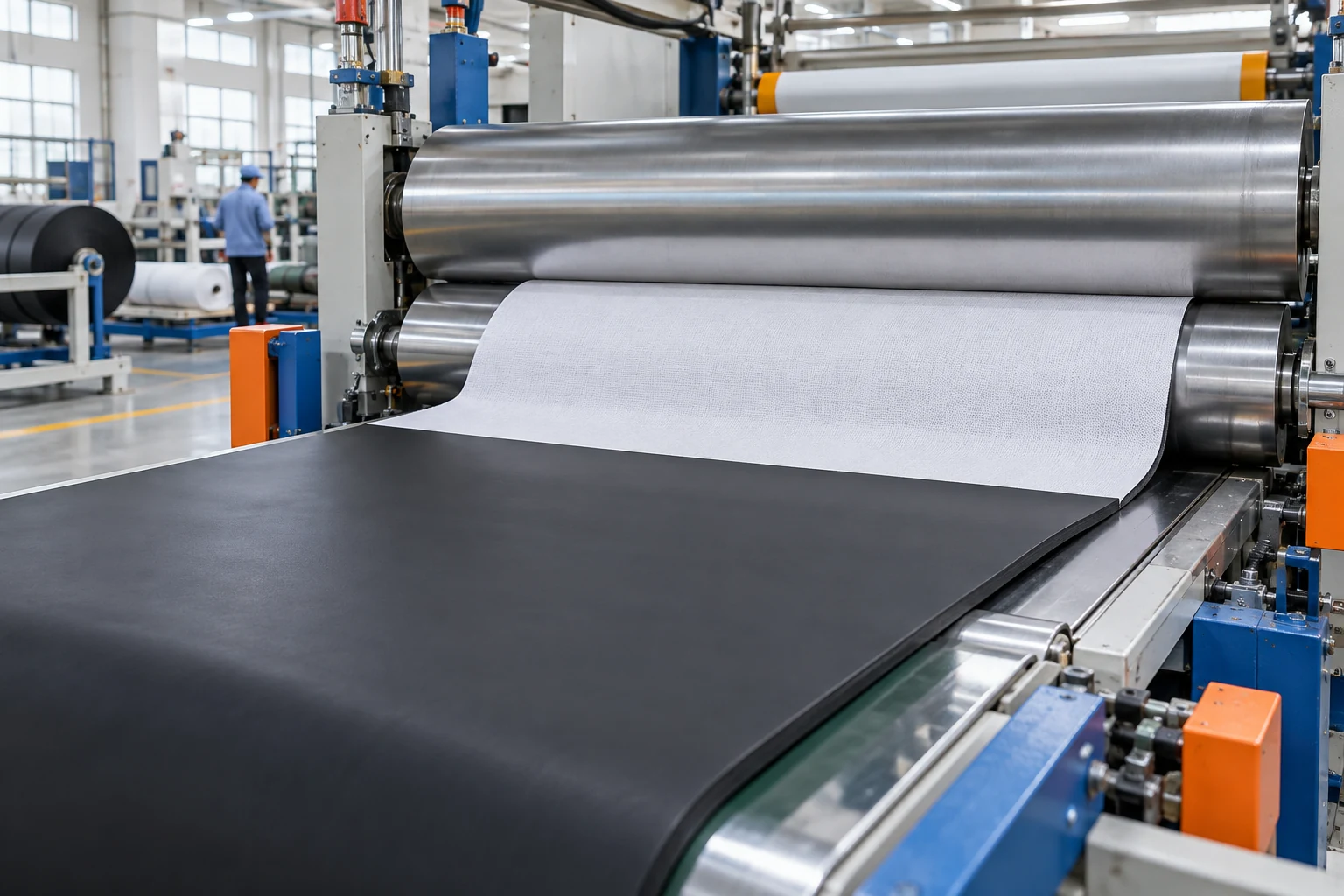
After the rubber reaches the required feel, it is pressed flat and bonded to the fabric surface. This lamination stage helps create a smooth top layer for tile movement and makes the custom mahjong mat feel stable on the table.
3. Die-Cut the Sheet into a Mahjong Mat Blank
A cutting die is made for the required size and corner shape. It cuts the laminated material into uniform mat blanks, sometimes called “white blanks” before the artwork is applied. One common format is 32.5 in x 32.5 in, although custom dimensions can be developed for different table layouts and packaging plans.
4. Finish the Four Sides with Overlock Stitching
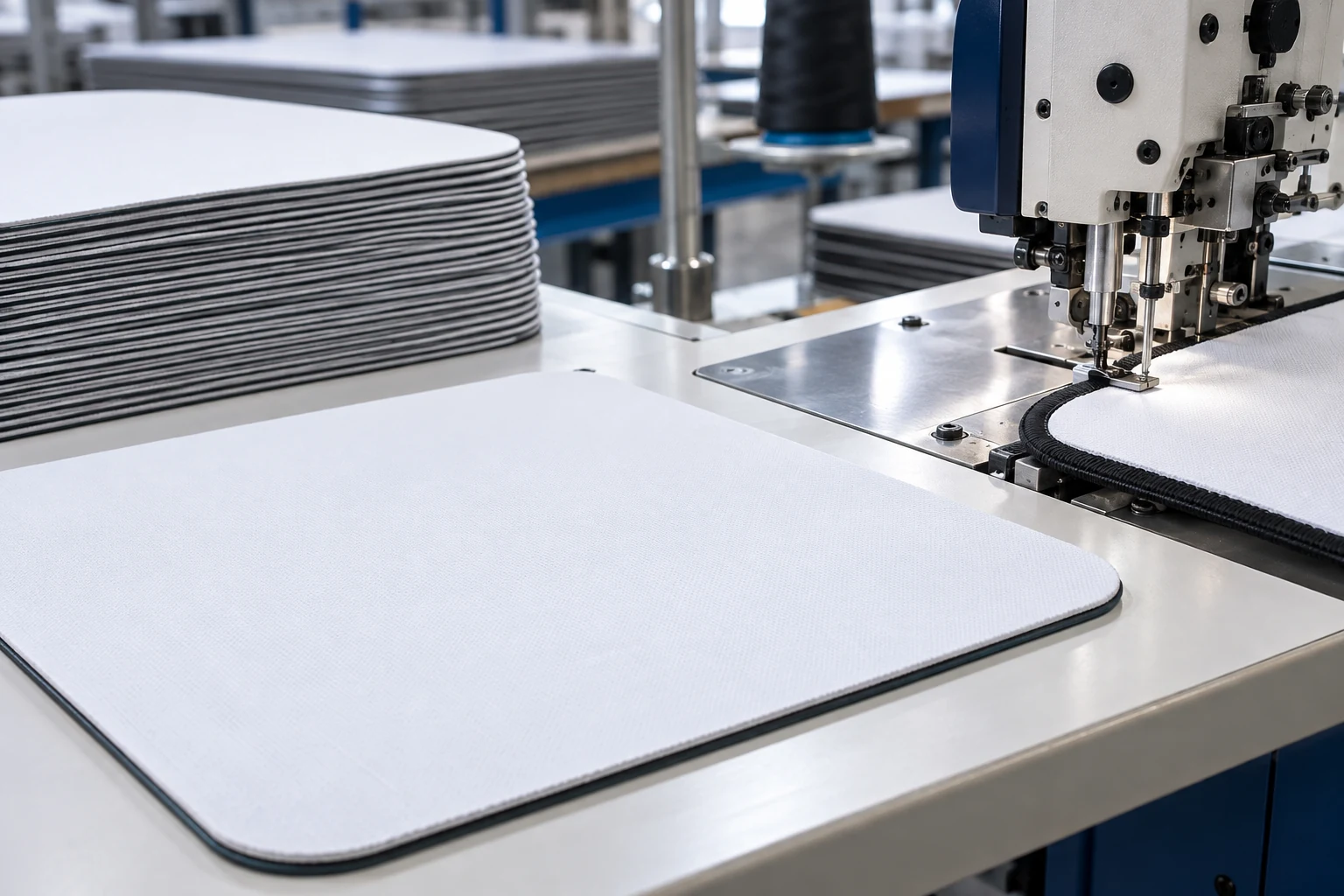
The mat blank then goes through the edge-stitching process. Overlock stitching gives the four sides a clean, refined appearance and helps the fabric edge stay neat through regular use, folding and storage.
5. Apply the Pattern with Heat Transfer Printing
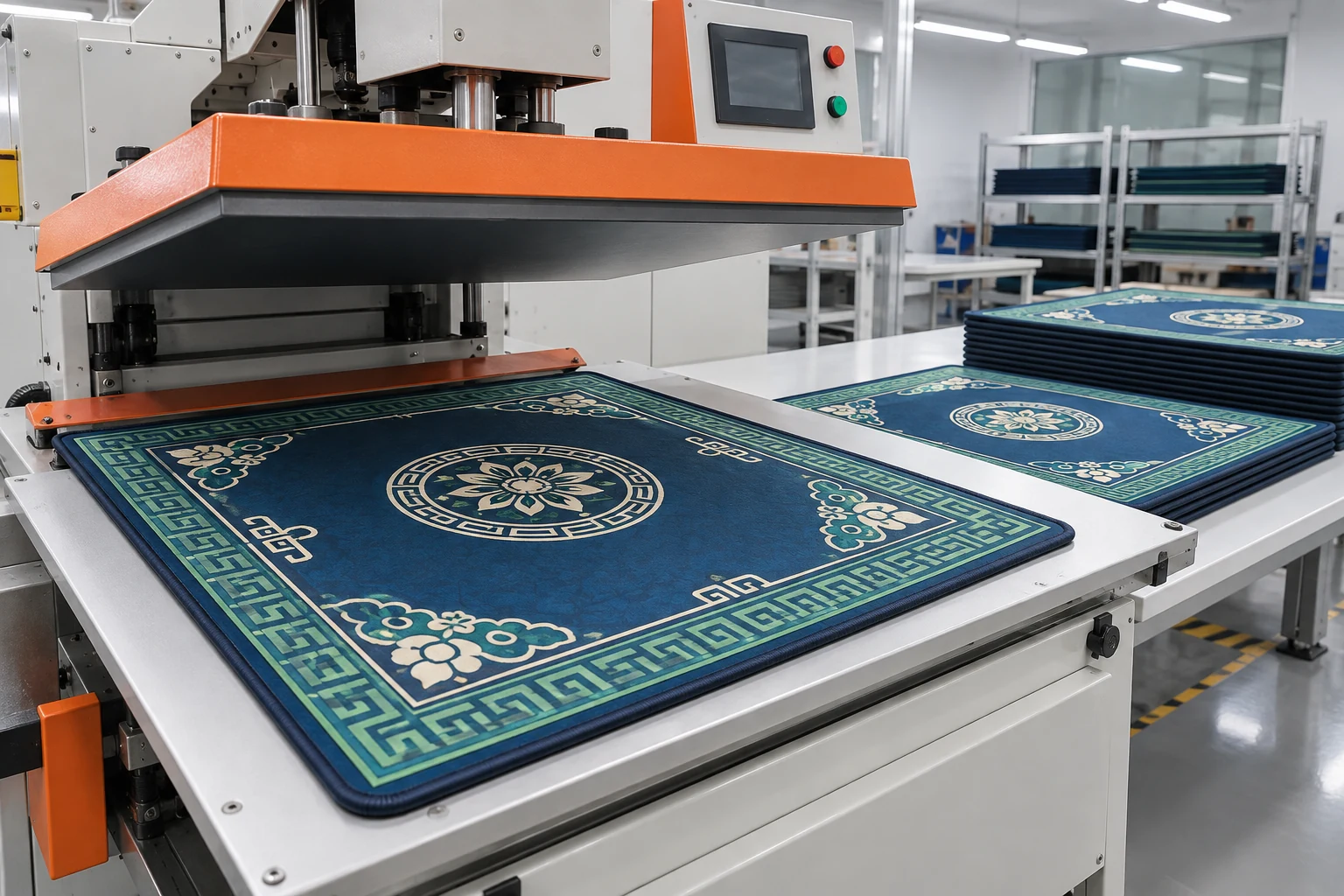
Once the construction is complete, the approved artwork is applied using heat transfer printing. This allows brands to create custom mahjong table layouts, borders, decorative patterns, colorways and private-label graphics. The printed surface is checked against the approved design before the order moves to the final stage.
6. Inspect and Pack the Finished Mahjong Mat
Before packing, we review the shape, print presentation, edge stitching and overall appearance against the confirmed sample or product brief. The finished custom mahjong mats can then be prepared for wholesale cartons, retail sleeves or e-commerce fulfillment according to your project requirements.
What Affects Custom Mahjong Mat Quality?
A good mahjong mat should feel comfortable, sit steadily on the table and maintain a clean presentation. The main details to confirm are the softness of the rubber, the smoothness of the fabric surface, the shape of the die cut, the consistency of the stitched border and the clarity of the final artwork.
For a new product launch, sampling is the best point to check size, color, artwork placement, edge finish and hand feel. Our OEM and ODM custom service helps buyers bring these specifications together before bulk production.
Custom Mahjong Mat Sizes and Options
32.5 in x 32.5 in is a common square mahjong mat size, but it is not the only option. We can discuss custom dimensions, corner radii, rubber feel, edge colors, printed table layouts and packaging options based on your target market. Visit our custom card game and mahjong mats page to explore the wider product category.
Why Choose Aotumi Mats?
- Factory-led production: We connect material preparation, lamination, cutting, stitching, printing and packing into one product workflow.
- Custom-ready specifications: Size, softness, fabric, border, artwork and packaging can be reviewed together for your brand.
- Sample-based approval: A confirmed sample gives you a practical reference before a wholesale production run.
- Built for B2B buyers: We support product development for brands, wholesalers, distributors, promotional companies and e-commerce sellers.
To learn more about our production environment, see our rubber mat factory capabilities. You can also browse our custom mat product range for related desk mats, gaming mats and other tabletop products.
Mahjong Mat Manufacturing FAQ
What materials are used to make a mahjong mat?
Our custom mahjong mats use a prepared rubber layer bonded to a fabric surface. The rubber supports softness, flexibility and table grip, while the fabric provides the printable playing surface.
What is a common mahjong mat size?
A common square size is 32.5 in x 32.5 in, approximately 826 x 826 mm. Custom dimensions can also be discussed based on the table, playing layout and packing plan.
Can you add custom artwork to a mahjong mat?
Yes. We use heat transfer printing to apply approved artwork, table layouts, colors, borders and brand graphics to the finished mahjong mat.
Why is edge stitching important?
Overlock stitching creates a clean border around the four sides and helps keep the fabric edge neat during normal handling and storage.
Develop Your Custom Mahjong Mat with Aotumi Mats
Send us your target size, artwork, preferred material feel, estimated quantity and packaging idea. We will help turn the brief into a sample-ready custom mahjong mat.